Railway Arches to Rent
Search railway arches to rent and to let across 39 London areas and 8 UK cities. Free tools, rent data, and expert guides.
Featured London Areas
Browse railway arches in London's most popular arch clusters
SE1, SE16
£26–£35/sqft pa
The "Beer Mile" — over 24 craft breweries and taprooms. Bermondsey is a foodie destination and one of London's most mature arch clusters, with a vibrant mix of breweries, restaurants, and creative businesses thriving beneath Victorian viaducts.
E8, E5
£24–£38/sqft pa
Creative hub with a tech spillover from "Tech City." London Fields, E5 Bakehouse, and a thriving mix of creative studios, food businesses, and independent retailers define Hackney's arch scene.
EC2A, E1
£28–£42/sqft pa
Premium creative and tech hub at the heart of East London's gallery scene. Shoreditch arches command the highest rents in London, driven by proximity to Old Street's tech cluster and a world-class concentration of independent galleries and studios.
SW2, SW9
£15–£25/sqft pa
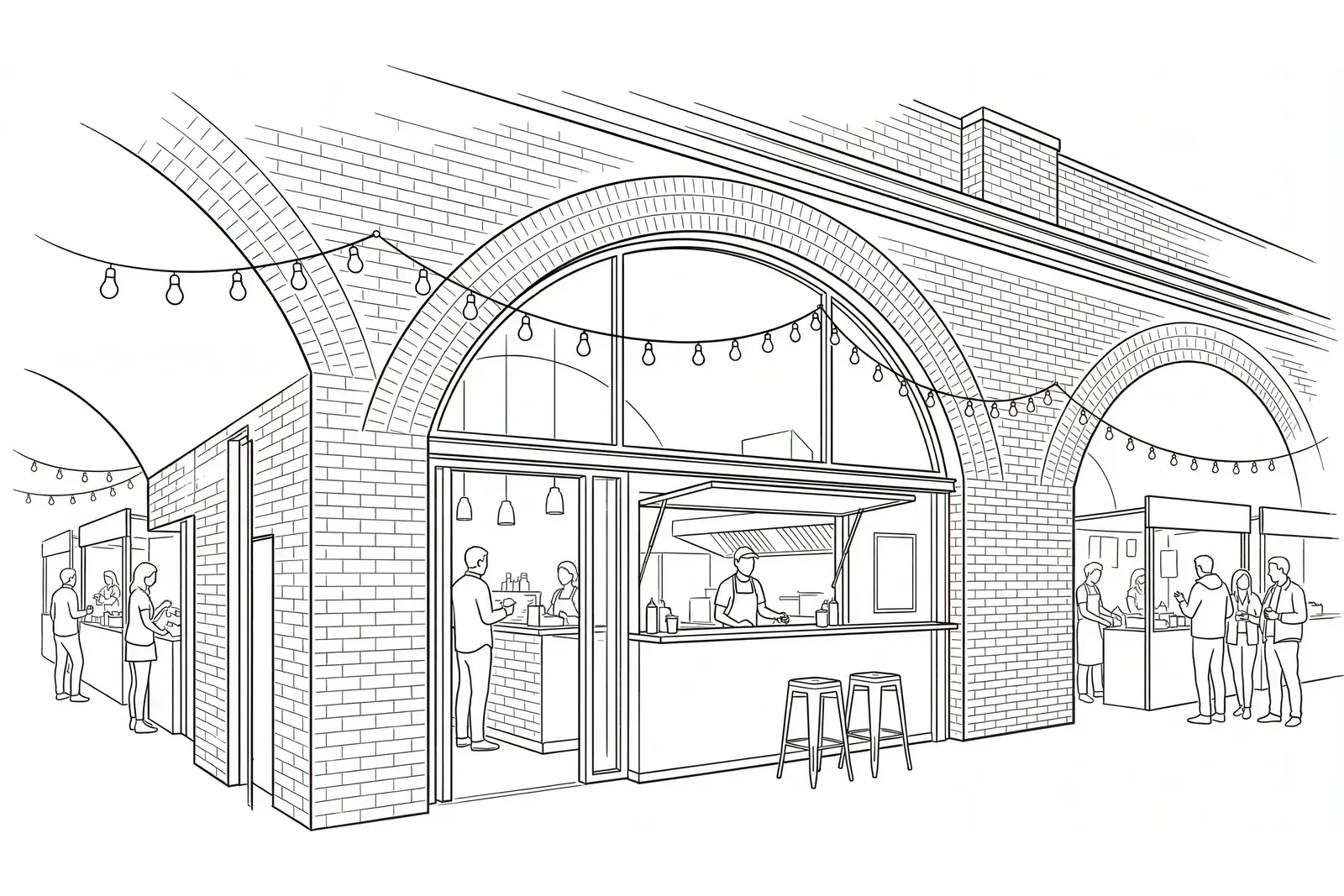
Cultural landmark with The Arch Company investing heavily. A vibrant, diverse area where community identity and commercial opportunity meet under the arches, though gentrification remains a local tension.
SE15
£12–£22/sqft pa
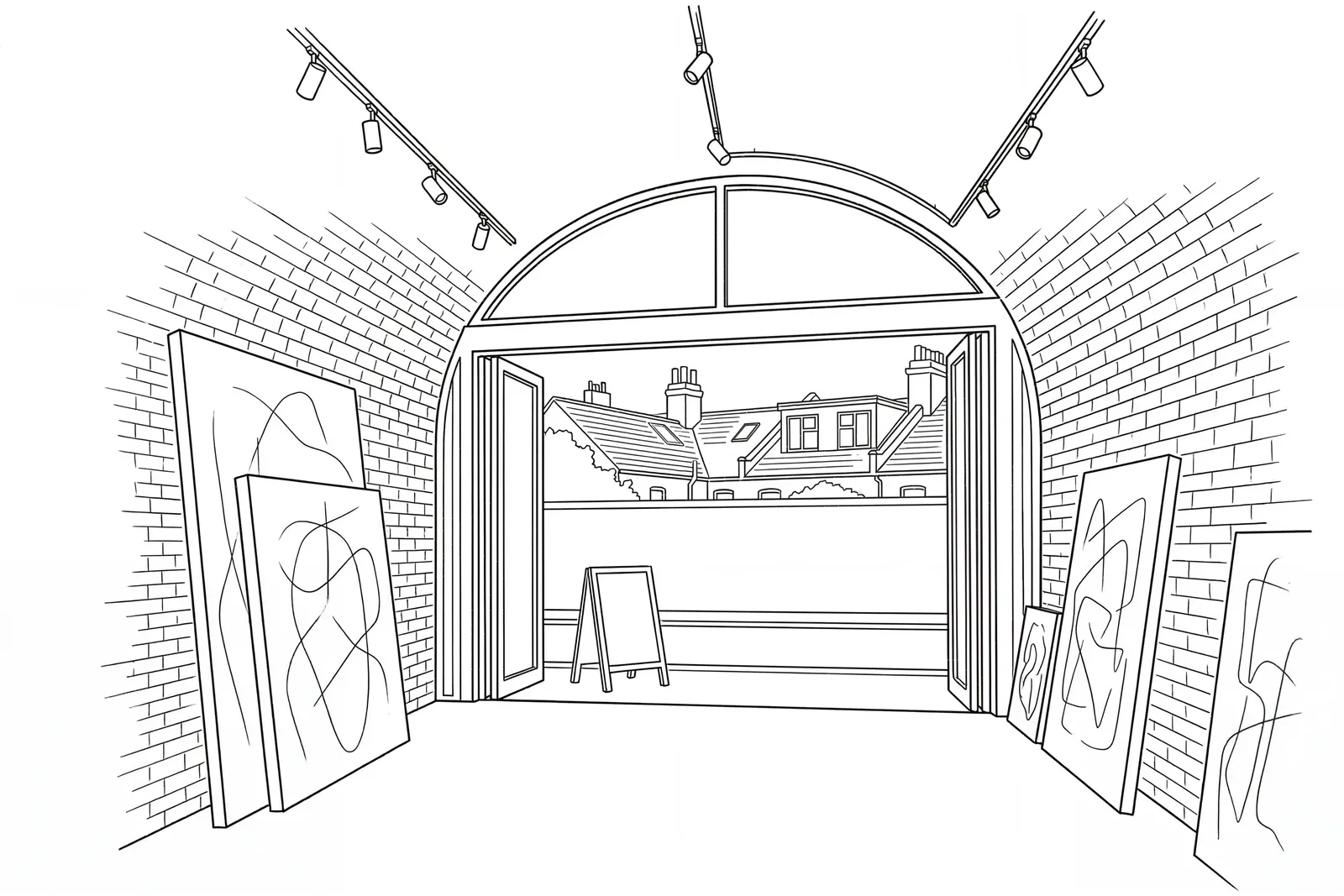
Emerging creative hub with £3m Arch Company investment in 15 derelict arches. Strong community identity and rapid growth make Peckham London's most exciting area for affordable arch space.
N1, E2
£26–£38/sqft pa
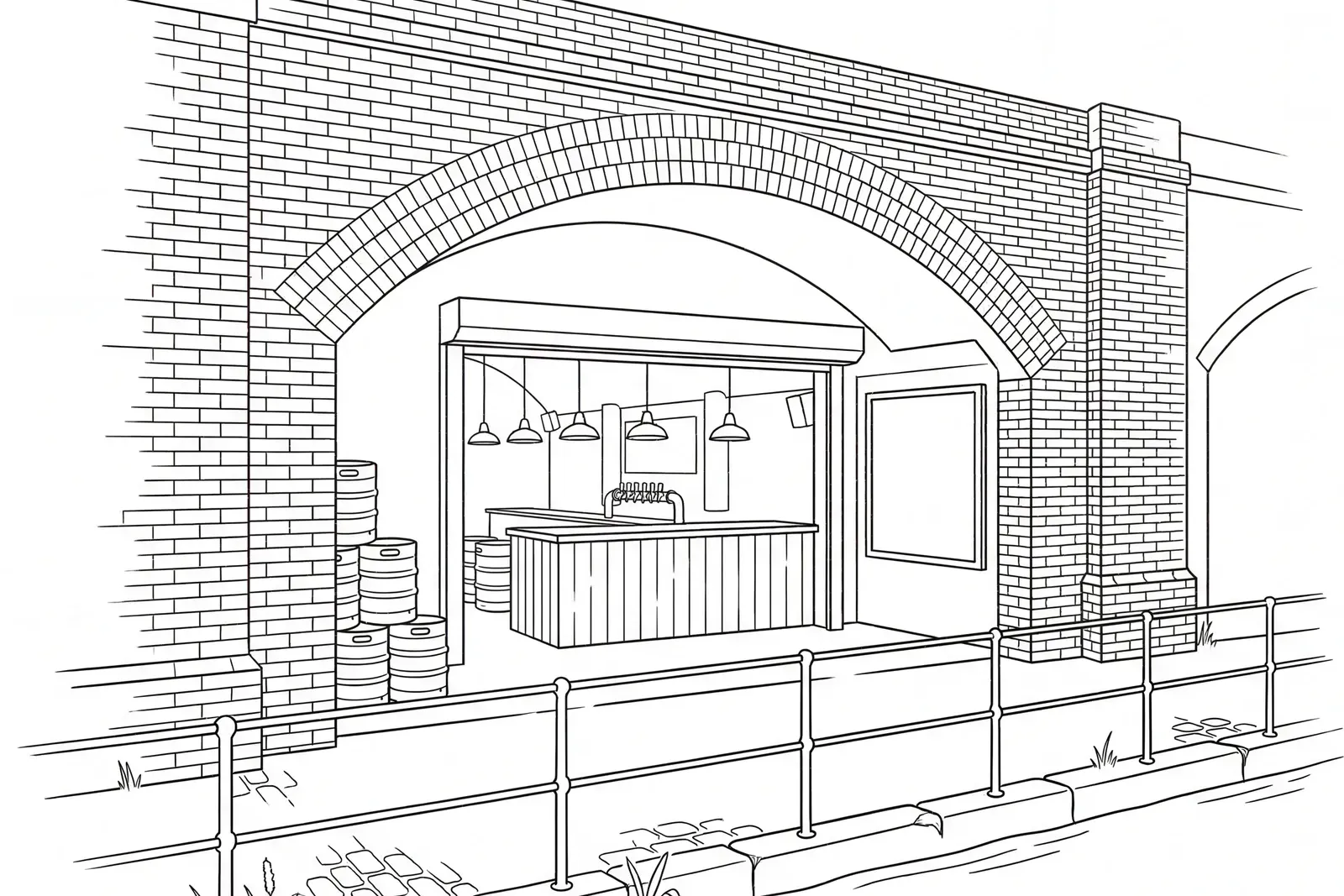
Creative and food destination managed primarily by Places for London. Hoxton's arches blend Shoreditch's creative energy with a distinct neighbourhood identity, anchored by Hoxton Street Market and a thriving restaurant scene.
Browse All Areas
Railway arches to rent and to let across 39 London areas and 8 UK cities
Free Tools
Make smarter decisions with our railway arch tools
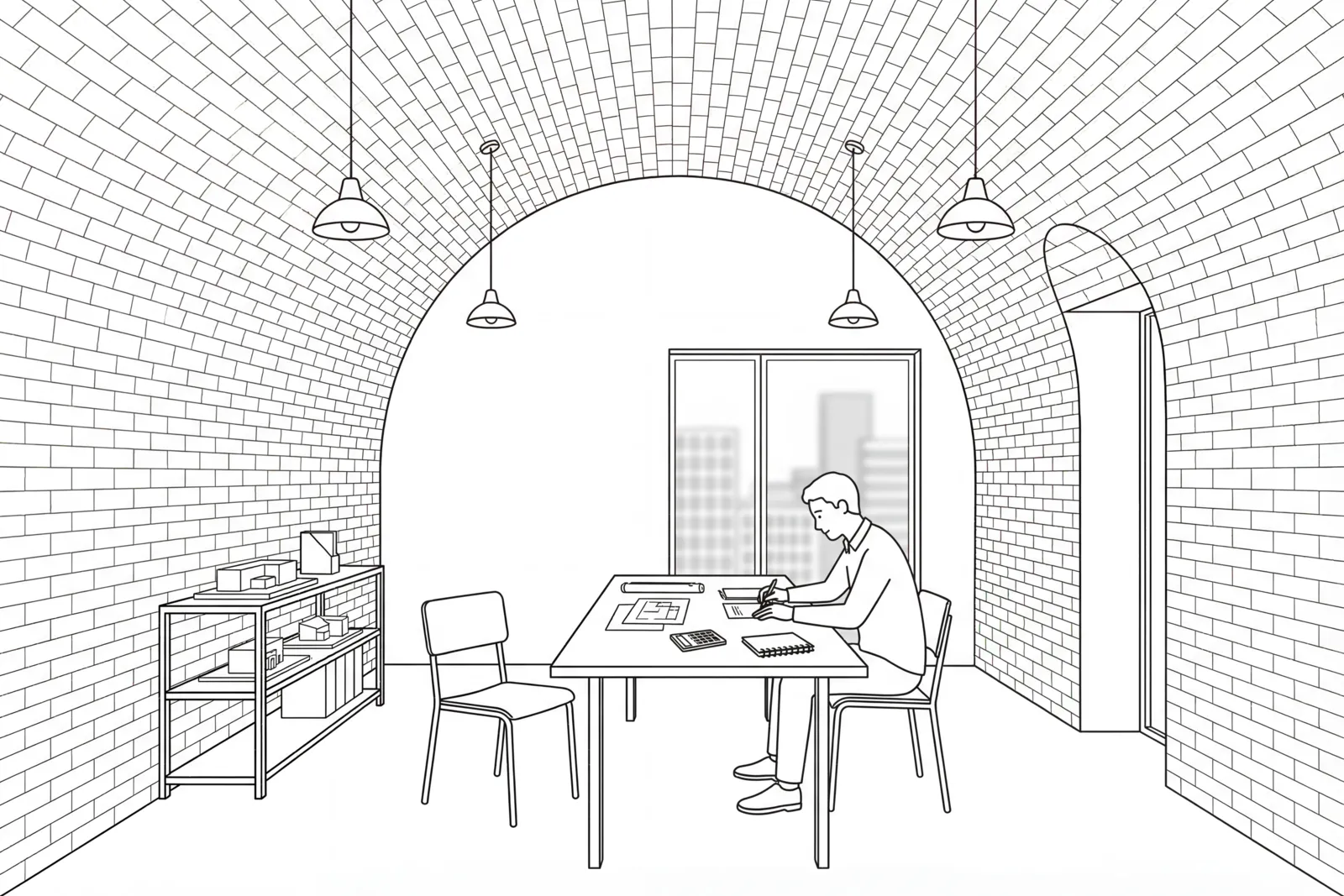
What will it really cost? Calculate rent, business rates, service charges, and insurance for any London arch.
Try It Free
Estimate your business rates liability and check if you qualify for Small Business Rates Relief.
Try It FreeRailway Arch Key Facts
Essential statistics for the UK railway arch market
5,200+
Arches managed by The Arch Company
Source: NAO, £1.46bn portfolio
850+
Arches managed by Places for London (TfL)
Source: TfL
60%
Of UK arches are in London (~3,150 units)
Source: NAO
£725m
Annual GDP contribution from arch businesses
Source: Hansard
25,000+
People employed in arch businesses
Source: NAO
£6.50–£38
Rent per sqft pa depending on region and use
Source: VOA / Research
38.2p–48.0p
Business rates per £1 of rateable value (2026/27)
Source: VOA
£200m
Project 1000: investment bringing 1,000 derelict arches back by 2030
Source: The Arch Company
Expert Guides
Everything you need to know about renting a railway arch
The definitive 7-step guide to finding, evaluating, and signing a lease on a railway arch. From understanding your needs to fit-out and opening day.
Read Guide
Why the total cost of a railway arch is 40–60% higher than the headline rent. Full breakdown of rent, business rates, service charges, insurance, and hidden costs.
Read Guide
How business rates work for railway arches. Understand multipliers, SBRR relief, and how to appeal your Rateable Value.
Read Guide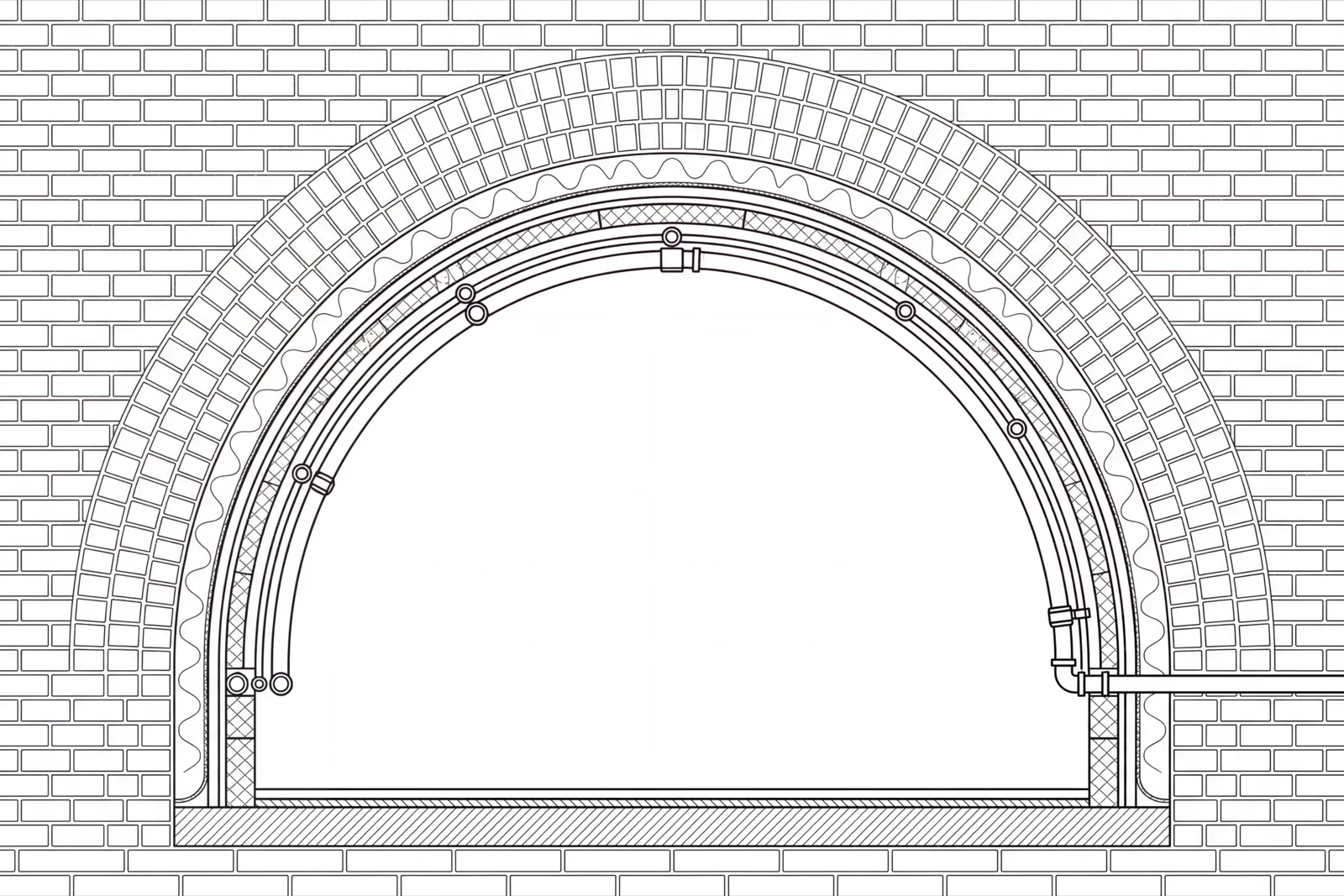
From waterproofing to 3-phase power. Everything you need to budget for when fitting out a railway arch, with costs by business type.
Read Guide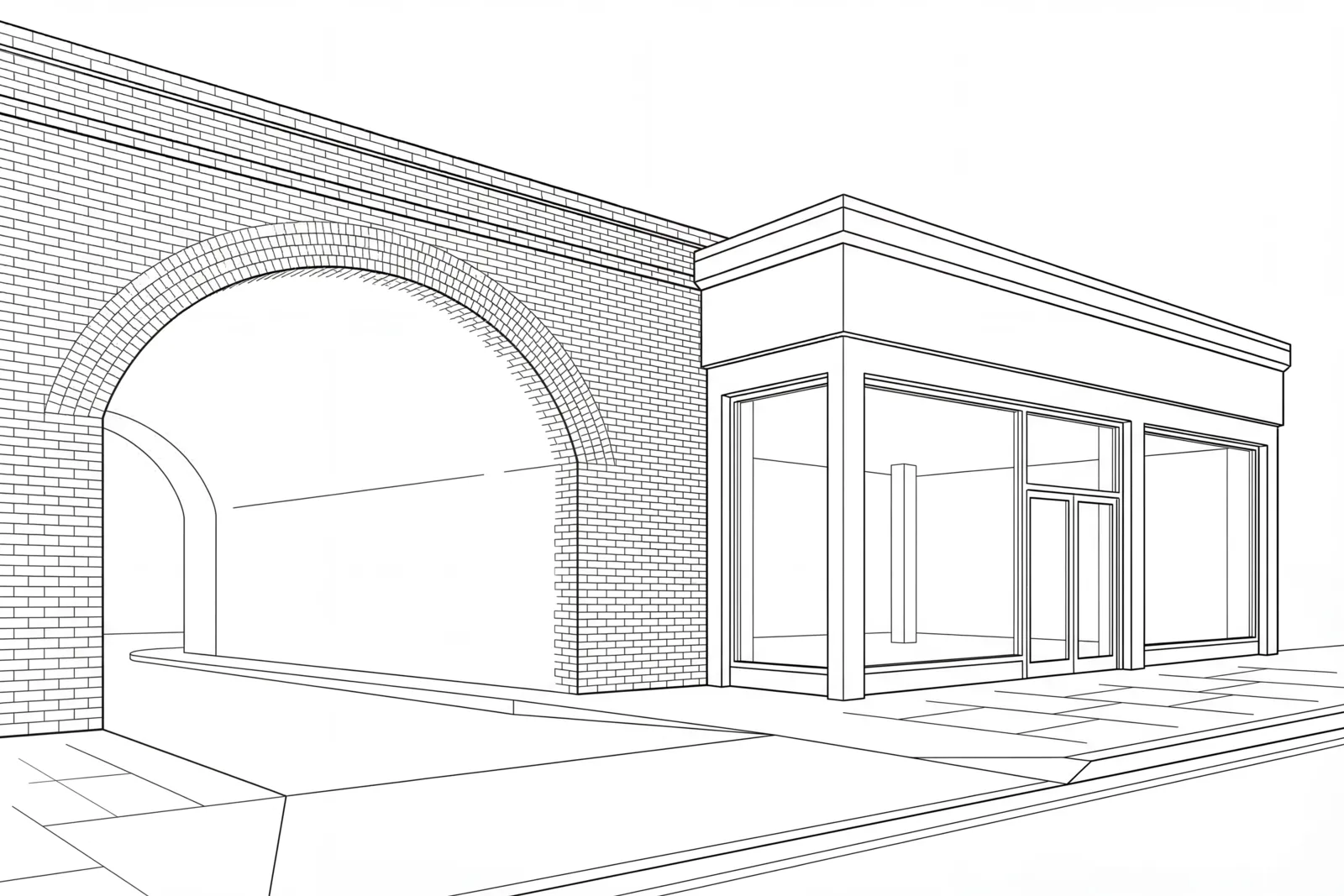
Should you rent a railway arch or a conventional commercial unit? Honest comparison of cost, condition, and suitability.
Read GuideArches by Sector
Specialist guides for the most popular arch business types

Use Class B2 · Fit-out £45–£120/sqft
Auto repair is one of the oldest and most established uses for railway arches. Clusters like Three Colts Lane in East London have served as local mechanical hubs for decades. The combination of high ceilings, robust floors, and wide front openings makes arches naturally suited to vehicle work. However, rising rents driven by leisure and hospitality demand are putting pressure on this traditional use, making it critical to understand the true economics before committing.
View GuideUse Class B2 / Sui Generis · Fit-out £30–£75/sqft
Railway arches are the natural home for automotive repair and MOT testing in the UK. The high vaulted ceilings accommodate four-post hydraulic lifts, thick brickwork dampens pneumatic tool noise, and urban locations provide a constant stream of local customers. From independent garages to DVSA-approved MOT centres, arches have housed mechanics for over a century.
View Guide
Use Class Sui Generis · Fit-out £70–£160/sqft
Railway arch bars have become iconic London destinations. From Bermondsey's taprooms to Peckham's wine bars, the exposed brickwork, vaulted ceilings, and industrial character create an atmosphere that purpose-built units cannot replicate. The arch aesthetic is inherently on-trend — raw, authentic, and photogenic. Critically, bars are classified as sui generis (outside any use class), meaning you need full planning permission to establish one in an arch, making the process longer and less certain than Class E uses.
View Guide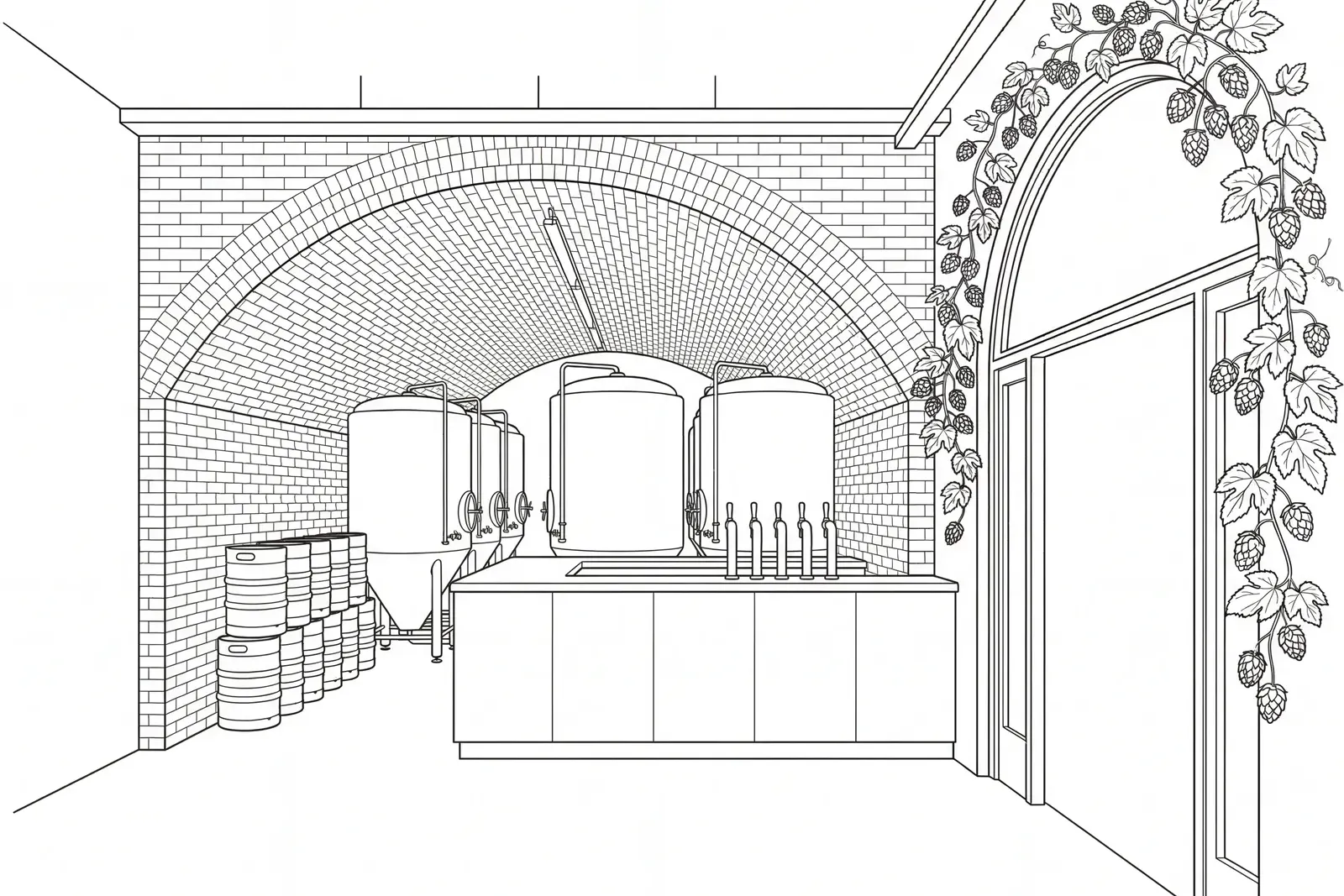
Use Class B2 · Fit-out £80–£175/sqft
Railway arches are the spiritual home of London's craft brewing revolution. Over 60 breweries operate from arches across the capital, drawn by the combination of affordable space, industrial character, and the unique atmosphere that Victorian brickwork lends to taprooms. The Bermondsey Beer Mile alone hosts 24+ breweries and taprooms, proving that arches and brewing are a natural pairing. Arches offer the height for fermentation vessels, the structural strength for heavy equipment, and the thick walls that help maintain consistent temperatures. For breweries planning a taproom, the built-in character eliminates the need for expensive interior design — customers come for the raw, industrial experience.
View Guide
Use Class E(d) · Fit-out £100–£200/sqft
The curved arch shape is a natural fit for climbing walls, offering the height and dramatic form that purpose-built units lack. Bouldering gyms need a minimum of 10 feet (14–16 feet for challenge walls), and arches typically provide 3–8m at peak — more than enough. Brands like VauxWall have proven the model in central London, attracting climbers who value the convenience and atmosphere of an arch-based facility. However, the critical challenge is that you cannot bolt climbing holds to the arch structure — all walls must be freestanding.
View GuideUse Class E / B2 · Fit-out £75–£150/sqft
The speciality coffee roasting revolution has found a spiritual home in railway arches. The raw Victorian brickwork provides the perfect minimalist aesthetic, open floor plans allow logical production flow from green bean storage to roasting and dispatch, and thick walls maintain stable temperatures for sensitive bean storage. Over a dozen roasters now operate from London arches alone.
View Guide
Use Class B2/E · Fit-out £65–£150/sqft
Railway arches have become the natural home for London's specialty coffee roasting scene. Brands like Watch House and Method Coffee operate from arches, drawn by the combination of affordable production space, the industrial aesthetic that resonates with coffee culture, and the ability to combine roasting with a retail cafe in a single unit. The thick masonry walls help with temperature stability during roasting, while the high ceilings accommodate commercial roasters and their extraction systems.
View Guide
Use Class E(g)(iii) · Fit-out £30–£80/sqft
UCL research found that 23% of railway arch businesses are in manufacturing and production, making creative studios one of the most established arch use cases. From ceramics and woodworking to metalwork and textiles, arches provide the robust, adaptable spaces that makers need — with the noise tolerance, dust extraction potential, and heavy-duty floors that studio buildings lack. Community models like shared maker spaces have proven particularly successful, with operations like Turning Earth Ceramics and South London Makerspace demonstrating how arches can serve as incubators for creative businesses.
View Guide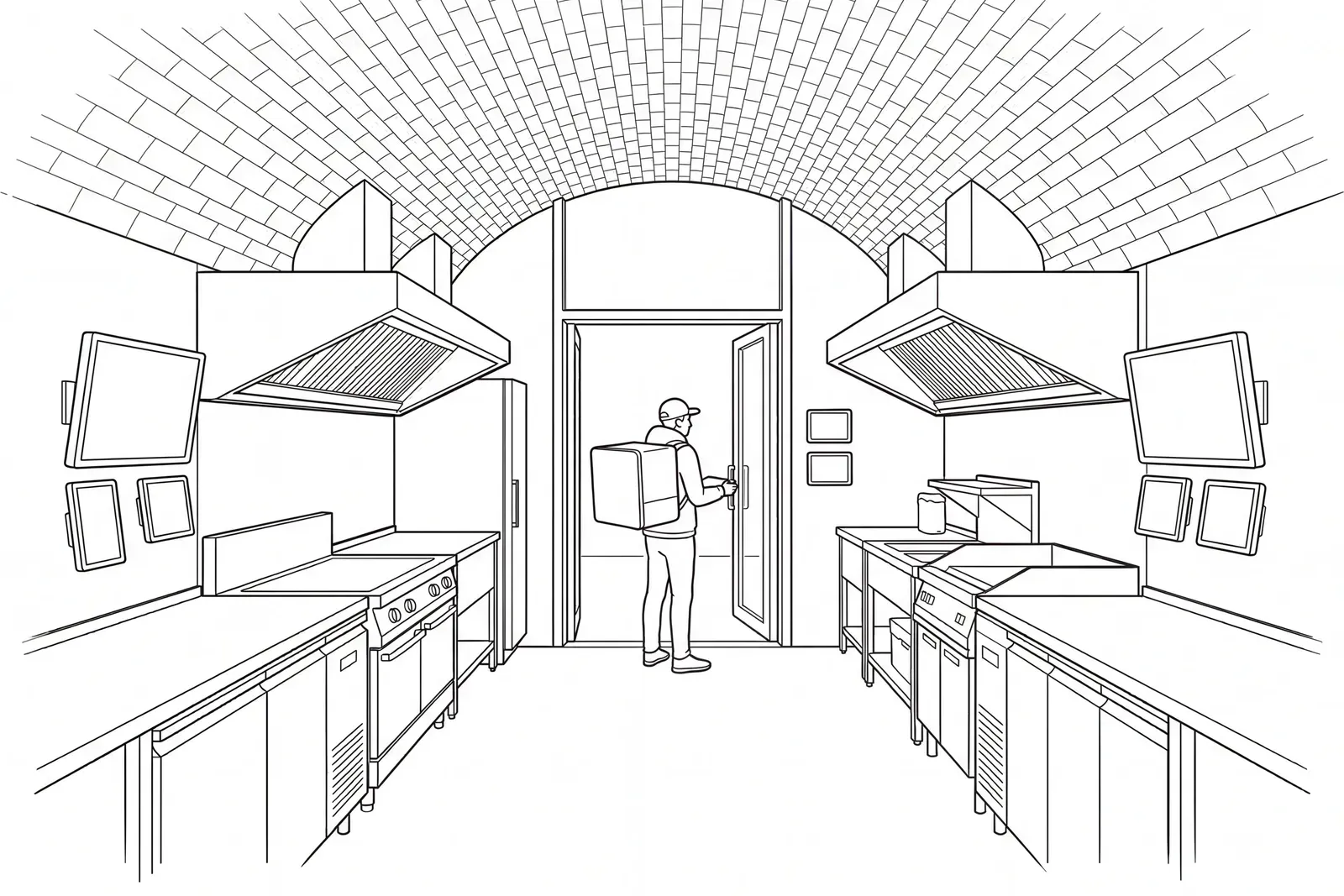
Use Class E · Fit-out £60–£120/sqft
Dark kitchens (also called ghost kitchens or cloud kitchens) are purpose-built food production spaces that serve delivery platforms like Deliveroo, Uber Eats, and Just Eat. Railway arches are increasingly popular for dark kitchens because they offer the space, ventilation potential, and affordable rents needed to make delivery-only food businesses profitable. Unlike restaurants, dark kitchens don't need customer-facing space, high-street visibility, or front-of-house design — making the raw arch condition a feature rather than a limitation. The typical arch dark kitchen operates 2–4 brands from a single space, maximising revenue per square foot.
View Guide
Use Class Sui Generis · Fit-out £80–£175/sqft
The Victorian aesthetic of railway arches has made them one of London's most sought-after event spaces. From weddings and corporate events to product launches and pop-ups, the exposed brickwork, dramatic vaulted ceilings, and industrial character create a distinctive atmosphere that purpose-built venues cannot replicate. Hire rates range from £2,000 to £5,670 per day for a 200-capacity space, making event use one of the highest-revenue applications for a railway arch.
View Guide
Use Class B2 · Fit-out £75–£175/sqft
Railway arches are the backbone of London's artisanal food production sector. In Bermondsey alone, food and beverage businesses account for 45% of the business mix, with the Beer Mile hosting 24+ craft producers. From E5 Bakehouse milling flour on-site to Neal's Yard Dairy ageing cheese in climate-controlled vaults, arches offer the combination of affordable production space, thick walls for temperature stability, and proximity to urban markets that food producers need. The distinction from dark kitchens is important: these are production businesses making food for wholesale, retail, or on-site consumption — not delivery-only operations.
View Guide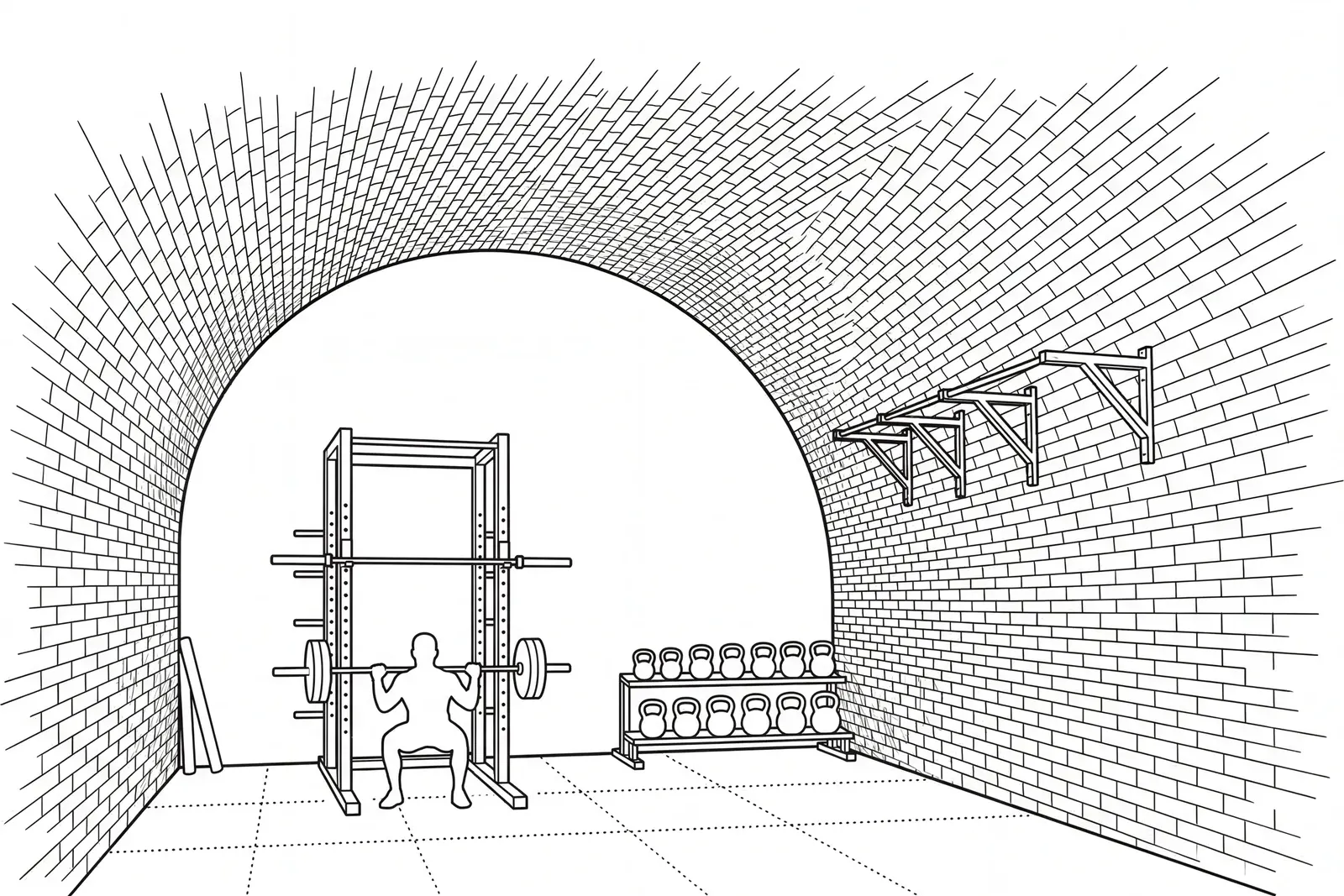
Use Class E · Fit-out £45–£100/sqft
Railway arches make exceptional gym and fitness spaces. The raw industrial aesthetic, high ceilings, and open-plan layout are perfect for CrossFit boxes, boxing gyms, climbing walls, and boutique fitness studios. The arch's curved ceiling creates a dramatic training environment that purpose-built gyms can't match, and the structural strength handles heavy equipment, rope anchors, and wall-mounted rigs. London's arch gym scene has exploded, with dozens of fitness businesses trading from arches across East and South London. The thick masonry walls provide natural sound insulation — crucial for early morning or late evening classes in residential areas.
View GuideUse Class E(g) / B2 · Fit-out £100–£250/sqft
The music industry has found sanctuary in railway arches for decades. The thick masonry walls — often multiple bricks deep — provide natural soundproofing far superior to standard commercial units. From Terminal Studios in Bermondsey (hosting acts from Nirvana to Adele) to Yellow Arch Studios in Sheffield, arches and music are a proven combination.
View GuideUse Class E · Fit-out £80–£175/sqft
The 'arch restaurant' is a well-established concept in London's dining landscape. The dramatic Victorian architecture — high curved ceilings and exposed brickwork — eliminates the need for expensive interior design, as customers are drawn to the industrial atmosphere. Mezzanine dining decks increase covers, and clustering with other food businesses creates destination dining experiences.
View Guide
Use Class B8 · Fit-out £15–£45/sqft
Storage and logistics represent a lower-cost but strategically important use for railway arches. Last-mile delivery accounts for 53% of total shipping costs and up to 41% of total supply chain expenses, making centrally-located arches valuable as distribution hubs. Arches are ideally positioned for mode-transfer operations — heavy vehicles to e-cargo bikes or smaller vans — and the demand for urban logistics space is only growing as e-commerce expands. Network Rail's Bow Goods Yard development (30 acres of rail-fed freight and last-mile logistics) signals the scale of opportunity.
View GuideUse Class Sui Generis / E · Fit-out £75–£150/sqft
The 'hidden gem' appeal of railway arches makes them natural homes for wine bars, cocktail bars, and taprooms. The vaulted brickwork creates warm, cave-like atmospheres ideal for intimate evening venues. From Gordon's Wine Bar — London's oldest, operating since 1890 — to modern craft cocktail bars in Peckham, arches and bars are a timeless pairing.
View GuideStay Updated
Get notified when new arches become available and receive weekly market updates