Railway Arch Costs: What You'll Really Pay in 2026
How much does it cost to rent a railway arch? We break down rent, business rates, service charges, insurance, and fit-out costs with area-by-area benchmarks for London and the UK.
By Taro Schenker, Founder & EditorLast updated: February 2026
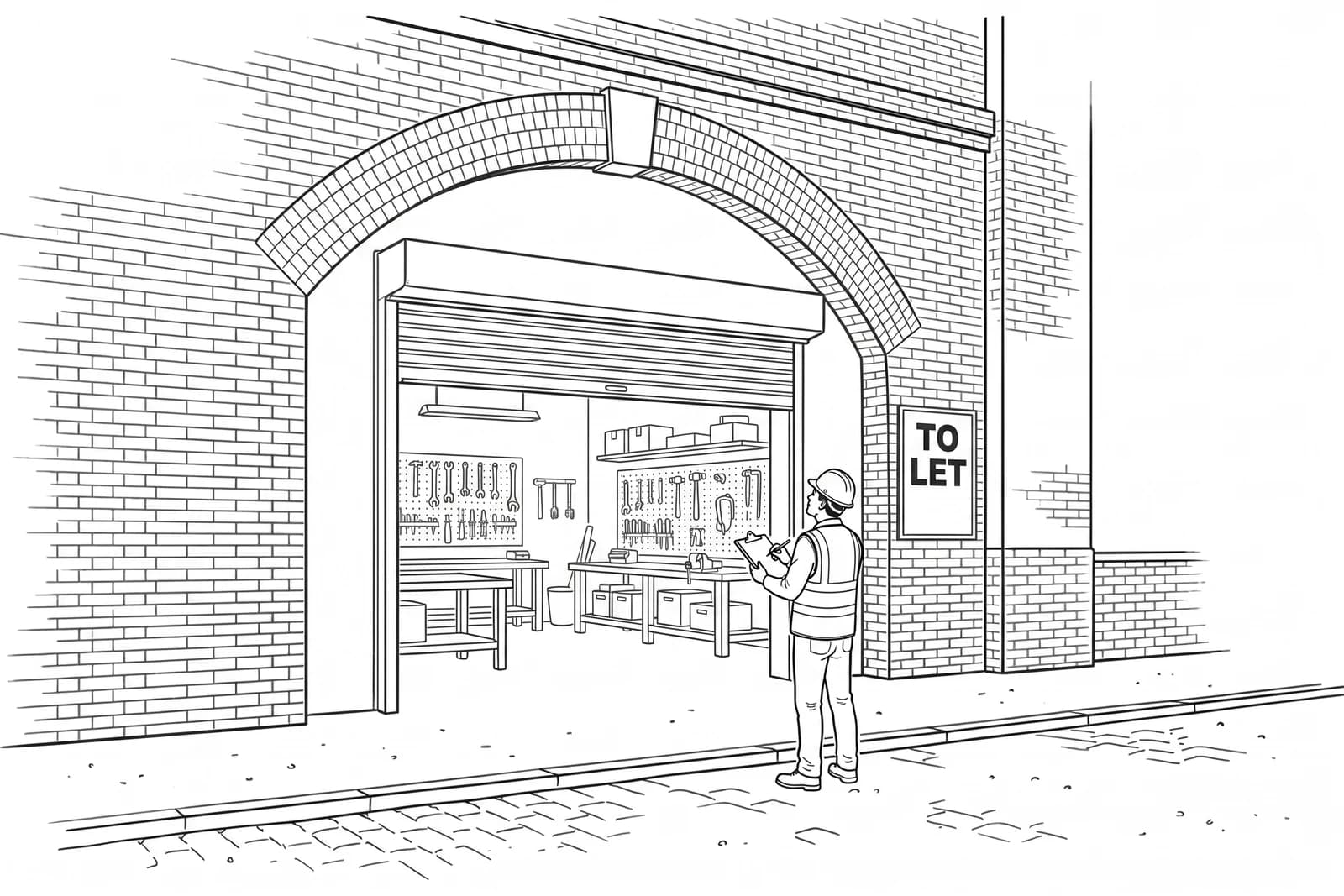
Every railway arch listing shows a “headline rent” — the base cost per square foot. But that is only part of what you pay. Business rates are often the biggest addition, and once you layer in service charges, insurance, and upfront fit-out costs, the real number looks very different from the one in the listing.
This guide breaks down every cost component you will face as a railway arch tenant, with specific numbers drawn from current market data. We cover base rent across London and the UK, business rates with the latest 2026/27 multipliers, service charges, insurance, upfront costs like deposits and legal fees, and the hidden costs that catch tenants off guard. Whether you are budgeting for a brewery in Bermondsey or a workshop in Leeds, you will find the figures you need here.
Every arch is different, so use our calculator for a personalised estimate based on your specific location, size, and business type.
How Much Does a Typical London Arch Cost Per Month?
2,560 sqft arch — total cost of occupation breakdown. Source: ArchLet market research, VOA 2026/27 multipliers.
| Cost Component | Monthly (£) | Annual (£) | % of Total |
|---|---|---|---|
| Base Rent | £5,830 | £69,960 | 61.9% |
| Business Rates | £3,270 | £39,240 | 34.7% |
| Service Charge | £270 | £3,240 | 2.9% |
| Insurance | £50 | £600 | 0.5% |
| Total | £9,420 | £113,040 | 100% |
Key insight: Business rates add approximately 35% on top of the base rent for this arch. The headline rent of £5,830/month becomes £9,420/month once all occupation costs are included — a 62% increase over the advertised figure.
How Much Is Railway Arch Rent by Area?
Average rents per square foot per annum across major arch clusters. Source: The Arch Company, Places for London, Rightmove Commercial, ArchLet research (2025–2026).
London
| Area | Typical Use | Avg Rent (/sqft pa) | 5-Year Growth | Trend |
|---|---|---|---|---|
| Southwark/SE1 | Leisure/F&B | £26–£35 | +25% | Rising |
| Hackney/E8 | Creative/F&B | £24–£38 | +22% | Rising |
| Bethnal Green/E2 | Mixed industrial | £20–£30 | +20% | Rising |
| Brixton/SW2 | Mixed | £15–£25 | +18% | Rising |
| Peckham/SE15 | Emerging | £12–£22 | +20% | Rapid rise |
| Shoreditch/EC2A | Creative/Tech | £28–£42 | +28% | Rising |
| Deptford/SE8 | Creative/Industrial | £10–£18 | +15% | Rising |
| Vauxhall/SE11 | F&B/Leisure | £22–£32 | +24% | Rising |
| Camberwell/SE5 | Creative/Arts | £12–£20 | +14% | Stable |
| Hoxton/N1 | Creative/F&B | £26–£38 | +22% | Rising |
| Twickenham/TW1 | Workshop/Storage | £10–£18 | +12% | Stable |
| Bromley/BR1 | Industrial/Auto | £8–£15 | +10% | Stable |
| Croydon/CR0 | Industrial/Workshop | £8–£16 | +14% | Rising |
| Cambridge Heath/E2 | Creative/Mixed | £18–£28 | +20% | Rising |
| London Fields/E8 | F&B/Creative | £22–£35 | +22% | Rising |
| Catford/SE6 | Auto/Industrial | £8–£14 | +10% | Stable |
| Haringey/N4 | Mixed/Industrial | £12–£20 | +16% | Rising |
| Hendon/NW4 | Auto/Trade | £10–£18 | +12% | Stable |
| Barnet/EN5 | Auto/Storage | £8–£15 | +8% | Stable |
| Brent/NW10 | Industrial/Trade | £10–£18 | +14% | Rising |
| Homerton/E9 | Creative/Industrial | £16–£26 | +18% | Rising |
| Wanstead/E11 | Auto/Storage | £8–£14 | +8% | Stable |
| Bexley/DA | Auto/Storage | £6–£12 | +6% | Stable |
| Wembley/HA9 | Mixed/Trade | £10–£18 | +15% | Rising |
| Leytonstone/E11 | Auto/Creative | £10–£16 | +14% | Rising |
| Lewisham/SE13 | Industrial/Creative | £10–£18 | +16% | Rising |
| Borough/SE1 | F&B/Retail | £28–£40 | +26% | Rising |
| Mile End/E3 | Mixed | £14–£22 | +18% | Rising |
| Kentish Town/NW5 | Creative/F&B | £18–£28 | +20% | Rising |
| Hackney Central/E8 | Creative/F&B | £22–£34 | +22% | Rising |
Outside London
| Area | Typical Use | Avg Rent (/sqft pa) | 5-Year Growth | Trend |
|---|---|---|---|---|
| Birmingham Digbeth | Industrial/Creative | £10–£18 | +10% | Growing |
| Manchester Piccadilly | Mixed/Creative | £11–£20 | +12% | Growing |
| Leeds Southern Gateway | Industrial/Logistics | £5–£12 | +6% | Stable |
| Glasgow Saltmarket | Leisure/Creative | £10–£18 | +9% | Growing |
| Sheffield Princess St | Workshop/Industrial | £12–£16 | +8% | Stable |
| Newcastle Forth Banks | Services/Mixed | £9–£15 | +8% | Growing |
| Bath Ferry Court | Storage/Industrial | £26–£32 | +12% | Stable |
London contains approximately 60% of all UK railway arches (~3,150 units).
Rent is payable quarterly in advance. Most leases include upward-only rent reviews, meaning rent can only go up at review, never down.
How Much Are Business Rates on a Railway Arch?
Source: Valuation Office Agency (VOA), HM Treasury Autumn Statement 2025.
Business rates are a tax on the right to occupy commercial property, based on the Rateable Value (RV) set by the Valuation Office Agency (VOA). They are separate from rent and paid directly to your local council.
2026/27 Multiplier Table
| Category | Rateable Value | Multiplier (per £1 of RV) |
|---|---|---|
| Retail, Hospitality & Leisure (RHL) | Below £51,000 | 38.2p |
| Retail, Hospitality & Leisure (RHL) | £51,000–£499,999 | 43.0p |
| Standard | Below £51,000 | 43.2p |
| Standard | £51,000–£499,999 | 48.0p |
Small Business Rate Relief (SBRR)
If your arch is your only business premises, you may qualify for Small Business Rate Relief:
- RV below £12,000: 100% relief — you pay no business rates at all
- RV £12,000–£15,000: Tapered relief on a sliding scale
- RV above £15,000: Full rates apply, no SBRR available
Example Calculation
Arch with Rateable Value of £25,000 (standard category):
£25,000 × 0.432 = £10,800 per year
That is £900/month in business rates alone, before rent, service charges, or insurance.
What Are Railway Arch Service Charges?
Service charges cover the landlord's costs for maintaining shared areas and infrastructure around the arch. They are paid in addition to rent and business rates.
What They Cover
- Communal area maintenance — cleaning, repairs, and upkeep of shared access roads, pathways, and loading areas
- Viaduct lighting — external and communal lighting along the viaduct structure
- Shared drainage — maintenance and repair of communal drainage systems running through the viaduct
- Building insurance contribution — the landlord's insurance for the arch structure, passed through to tenants
Typical Range
Expect to pay £200–£400 per month for service charges on a standard London arch. Charges vary by location, arch size, and the level of communal facilities provided.
Watch for sweeper clauses: Many arch leases include a “sweeper clause” that allows the landlord to charge for any reasonable maintenance cost not specifically listed. This means service charges are variable and can increase without a cap. Always request a breakdown of the previous three years' service charges before signing a lease.
What Insurance Do You Need for a Railway Arch?
Commercial insurance is a requirement for any arch tenant. The types and costs vary depending on your business activity and staffing.
Required Types
- Public liability insurance — mandatory for all commercial tenants. Covers injury or damage claims from customers, visitors, or passers-by. Most landlords require a minimum of £5 million cover.
- Employers' liability insurance — legally required if you have any staff, including part-time employees. Minimum cover of £5 million is a legal requirement.
- Buildings insurance — usually arranged by the landlord and passed through to tenants via the service charge. Covers the arch structure itself. Check your lease to confirm who is responsible.
Typical Cost
Budget £50–£150 per month for your own insurance policies (public liability and employers' liability combined).
Factors That Affect Price
- Business activity: Food preparation and brewing attract higher premiums than office or storage use
- Arch condition: Arches with known damp or structural issues may increase premiums
- Location: Areas with higher footfall or crime rates may cost more to insure
What Upfront Costs Should You Budget For?
Before you start paying monthly rent, there are significant one-off costs to budget for. These can total tens of thousands of pounds depending on the condition of the arch and your fit-out requirements.
| Upfront Cost | Typical Range | Notes |
|---|---|---|
| Rent deposit | 3–6 months' rent | Held for the duration of the lease |
| Landlord's legal fees | £1,000–£3,000 | Tenant pays the landlord's solicitor costs |
| Your legal fees | £1,000–£3,000 | Your own solicitor for lease review |
| Stamp Duty Land Tax (SDLT) | Varies | Applies to leases where total rent exceeds £150,000 |
| Tanking / waterproofing | £5,000–£12,000 | Type C cavity drain membrane system |
| Full fit-out | £45–£175/sqft | Depends on business type and finish level |
| Fire suppression | Up to £70,000 | If required by building regulations or insurer |
| Schedule of Condition | £500–£1,500 | Photographic record of arch state at lease start |
Example: For a 1,500 sqft shell arch in Bermondsey at £30/sqft, the deposit alone (3 months) would be £11,250. Add legal fees, tanking, and a modest fit-out, and upfront costs could easily reach £80,000– £120,000 before you open the doors.
How Can You Reduce Railway Arch Costs?
There are several proven strategies for reducing the total cost of occupying a railway arch.
Claim Small Business Rate Relief (SBRR)
This is the single biggest saving available to most arch tenants. If your arch has a Rateable Value below £12,000 and it is your only business premises, you pay zero business rates. For an RV of £12,000, that is a saving of up to £5,184 per year. Apply through your local council.
Negotiate Rent-Free Periods
Rent-free periods are common for shell (unfitted) arches where significant tenant investment is required. Three to six months rent-free is typical for arches needing major fit-out. The landlord benefits from the tenant's capital investment in the property.
Share an Arch
Sub-letting part of your arch to another business can halve your effective rent. However, always check your lease first — many arch leases restrict or prohibit sub-letting without landlord consent. Some newer leases allow it with prior written approval.
Challenge Your Rateable Value
If you believe your arch's Rateable Value is too high, use the VOA's Check, Challenge, Appeal process. Start by checking the RV online, then submit a formal challenge with evidence of comparable properties. A successful challenge can reduce your rates bill significantly and may be backdated.
Consider Emerging Areas
Areas like Peckham and Deptford offer rents 40–60% lower than established locations like Bermondsey or Hackney. Lower rents also mean lower Rateable Values and therefore lower business rates — a double saving.
Railway Arch Costs: Frequently Asked Questions
Browse railway arches by area
Find arches to rent in a London region, a popular area, or a UK city.