Railway Arch Fit-Out Costs: Complete 2026 Guide
How much does it cost to fit out a railway arch? From waterproofing (£5k–£12k) to M&E and planning. Cost breakdowns by business type: £45–£175/sqft.
By Taro Schenker, Founder & EditorLast updated: February 2026
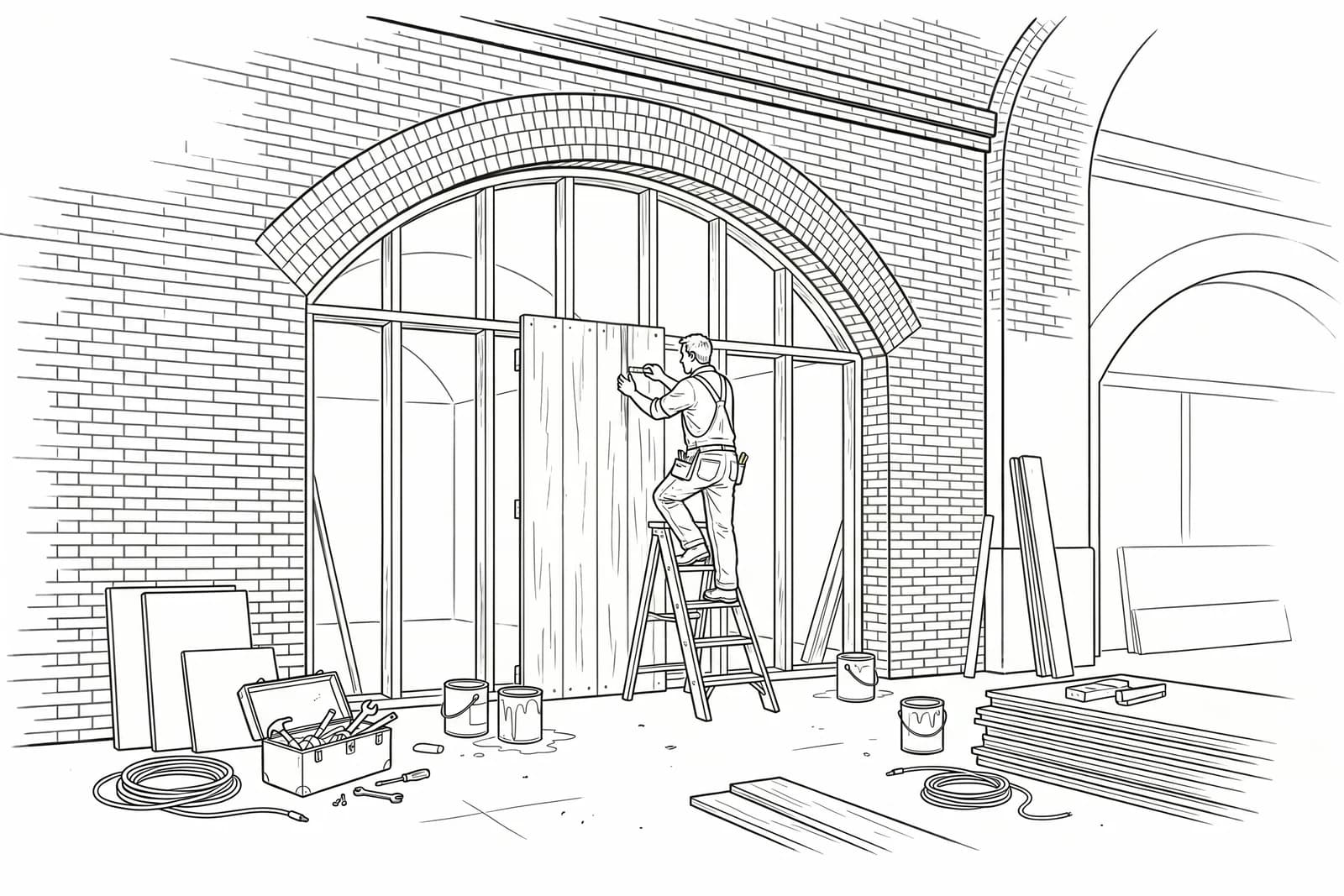
Fit-out is often the single largest upfront cost of taking a railway arch — ranging from £45 to £175 per square foot depending on your business type and the arch's condition. Unlike conventional commercial units, arches arrive as a shell: bare brick, no insulation, basic electrics, and often no running water.
This guide breaks down every element of arch fit-out, from waterproofing and insulation to mechanical and electrical installations, helping you budget accurately and avoid costly surprises.
How Much Does Railway Arch Waterproofing and Insulation Cost?
Damp is the number one issue in railway arches. Victorian brick construction means moisture penetrates from above, behind, and below. Proper waterproofing is non-negotiable for any business use.
Tanking Systems (£5,000–£12,000)
Internal tanking applies a waterproof membrane or cementitious coating to the internal surfaces. This is the most common approach for arches and creates a dry internal envelope. Costs vary by arch size, condition, and system chosen.
Insulation (£3,000–£8,000)
After waterproofing, insulation is essential for temperature control and energy costs. Options include spray foam (fastest, ~£3,000 for a standard arch), rigid board (best thermal performance), or mineral wool (cheapest but thickest). The arch's curved profile makes spray foam popular as it follows the contour without gaps.
Drainage & Damp Management
Some arches need a French drain system to manage ground water. If water pools at the base of walls or floor, budget an additional £2,000–£5,000 for drainage channels and sump pumps.
What Mechanical and Electrical Work Does a Railway Arch Need?
Electrical Supply (£3,000–£15,000)
Most arches have a single-phase electrical supply suitable for basic lighting and office use. Breweries, commercial kitchens, and workshops typically need a 3-phase supply upgrade — this alone can cost £8,000–£15,000 depending on distance from the nearest substation. Budget £3,000–£5,000 for internal distribution boards, lighting, and socket circuits.
Water & Waste (£2,000–£8,000)
Some arches have no water supply. Connecting to mains water typically costs £2,000–£4,000. Waste drainage is often the bigger challenge — the arch floor may be below sewer level, requiring a pump system (£3,000–£5,000). Food businesses need grease traps and appropriate drainage to meet Environmental Health requirements.
Gas Supply (£2,000–£5,000)
Required for commercial kitchens and some heating systems. Gas connection costs depend on proximity to the main and require Gas Safe registered installation.
Ventilation & Extract (£3,000–£12,000)
Railway arches have limited natural ventilation. All business uses need mechanical ventilation. Food, brewing, and workshop uses require extract systems — commercial kitchen extracts with filtration can cost £8,000–£12,000. Basic ventilation for office or retail use is more affordable at £3,000–£5,000.
Do You Need Planning Permission for a Railway Arch?
Listed Building Consent
Many railway viaducts are Grade II listed. This means any work affecting the character of the building — including fixing to walls, altering openings, or changing external appearance — requires Listed Building Consent from your local planning authority. This process typically takes 8–12 weeks and costs nothing to apply for, but getting it wrong can mean enforcement action and mandatory reversal.
Change of Use
If you're changing the Use Class of the arch (e.g. from industrial B2 to retail/food E), you may need planning permission. The 2021 Use Class reforms created the broad Class E category covering shops, restaurants, offices, and light industrial — so moves within Class E don't need permission. Changes to or from B2 (general industrial) or B8 (storage) still require approval.
Building Regulations
All fit-out work must comply with Building Regulations regardless of whether planning permission is needed. Key areas include:
- Fire safety — escape routes, fire doors, alarm systems
- Structural — any load-bearing changes need engineer sign-off
- Ventilation — minimum fresh air requirements for occupancy
- Accessibility — DDA compliance for public-facing spaces
- Energy efficiency — Part L compliance for heated spaces
How Much Does a Railway Arch Fit-Out Cost by Business Type?
| Business Type | Cost/sqft | 1,000 sqft Estimate | Key Costs |
|---|---|---|---|
| Brewery / Distillery | £80–£175 | £80,000–£175,000 | 3-phase power, drainage, extract, cooling |
| Commercial Kitchen | £60–£120 | £60,000–£120,000 | Extract, gas, grease traps, ventilation |
| Restaurant / Cafe | £55–£110 | £55,000–£110,000 | Kitchen extract, customer WC, decor |
| Gym / Fitness | £45–£100 | £45,000–£100,000 | Ventilation, flooring, changing rooms, showers |
| Creative Studio | £30–£65 | £30,000–£65,000 | Lighting, insulation, basic M&E |
| Workshop / Industrial | £25–£55 | £25,000–£55,000 | Power upgrade, extraction, flooring |
| Storage | £10–£25 | £10,000–£25,000 | Basic waterproofing, lighting, security |
Costs assume a shell condition arch requiring full fit-out. Arches with existing services or previous fit-out will be significantly cheaper. All figures exclude VAT. Source: ArchLet market research, contractor quotes, The Arch Company tenant data (2025–2026).